Gentlest firstAlways start with the least aggressive method. Your wax and coatings last longer.
Cool and shadedWork out of direct sun on panels that feel cool to the touch.
Never let it dryRinse or buff before any product dries on the paint or glass.
Less is moreA thin, even layer works better and buffs off easier than a thick one.
01
Pre-wash
The pre-wash lifts as much dirt as possible before anything touches the paint. Less grit on the car means fewer swirls when you wash. Only rinse first if there's caked-on mud: road film, salt and grime are what a pre-wash is made for.
How to
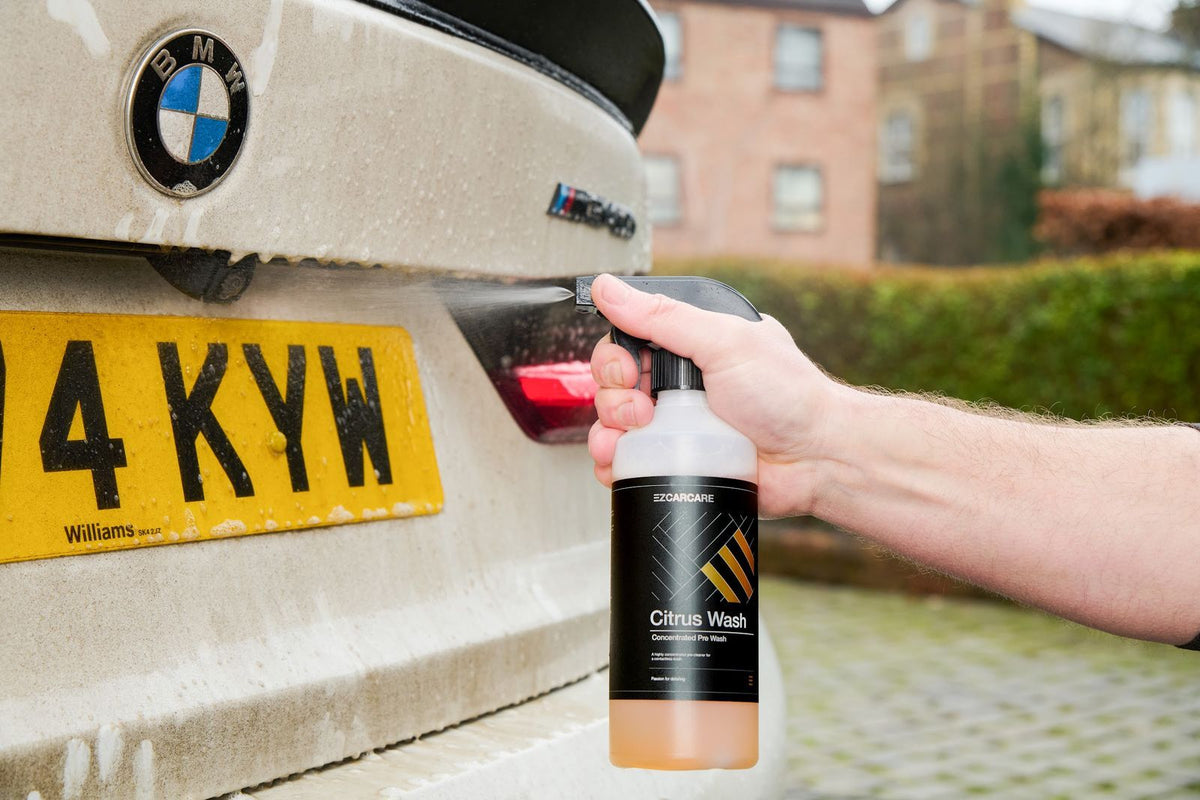
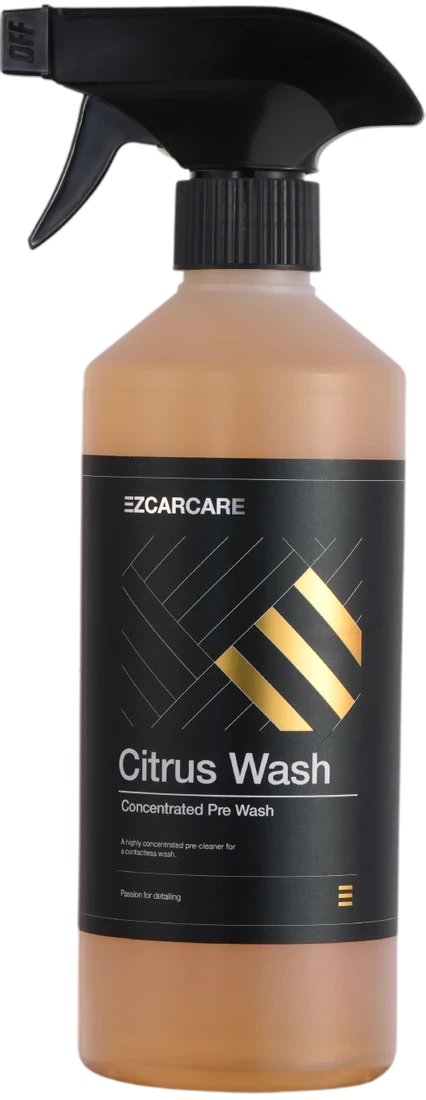
Mix Citrus Wash 10:1 in a pump or trigger sprayer (about 90ml in a litre). Go up to 5:1 for a very dirty car.
Spray the whole car in a fine film, lower panels, arches and sills first.
Leave it 1 to 5 minutes, depending on how dirty it is. Don't let it dry.
Rinse thoroughly, top to bottom.
Good to know
Stick to 10:1 for regular washes. Using it stronger every time wears waxes and sealants faster.
At 4:1 it's an engine bay degreaser and shifts tree sap and old organic marks. Cover electrics and air intakes first.
Door shuts, hinges, badges, grilles and rubber trims: spray at 10:1 to 5:1, leave 1 to 5 minutes, agitate gently with a detailing brush, rinse. Re-grease hinges after.
Don't use it on un-lacquered aluminium, chrome or vinyl wraps.
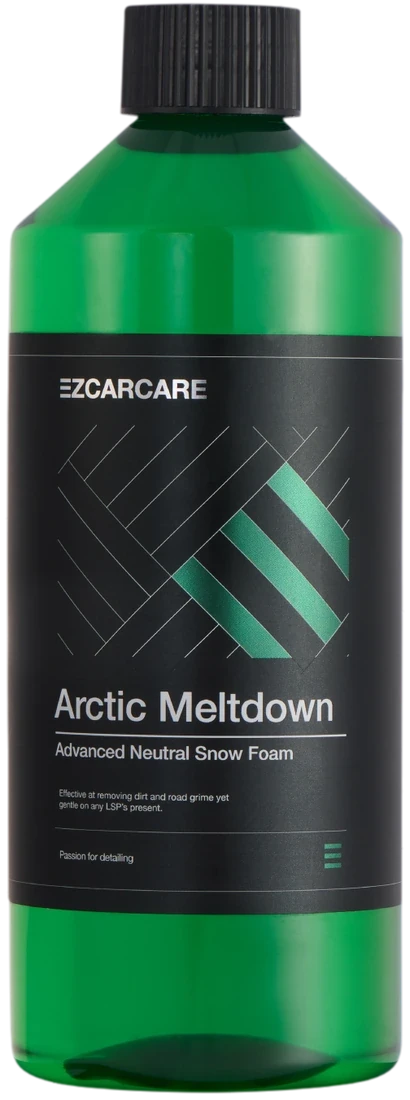
With a pressure washer, snow foam is the safest way to soften and lift dirt before you touch the paint. Arctic Meltdown is pH neutral, so it's ideal for regular washes and safe on waxes, sealants, ceramic coatings and delicate finishes.
How to
Add about an inch (100ml) of Arctic Meltdown to your foam lance bottle and top up with warm water.
Turn the gauge on the lance towards (–) until you get an even, clinging film of foam.
Cover the car and leave it 5 to 10 minutes while it slides down, taking the dirt with it.
Rinse thoroughly, top to bottom, before it dries.
Good to know
Thick foam isn't better. A fine blanket that clings for about 5 minutes does the work. Thick foam clumps and slides off sooner, and only the layer touching the paint is cleaning.
Very dirty car? Spray Citrus Wash first, then foam over it with Arctic Meltdown for the best of both.
Need more power from your foam? SuperFoam is hyper concentrated, around 20ml in your lance bottle.
One bucket of shampoo, one of plain water to rinse your mitt, ideally with grit guards. The rinse bucket keeps grit out of your shampoo and off your paint.
How to
Add Champs to your wash bucket: about 40ml in 10 litres (a 20 litre bucket half full). Fill the second bucket with plain water.
Start at the roof and work down, half a large panel at a time. The dirtiest areas, sills, bumpers and behind the arches, come last.
Glide the mitt with no pressure. The shampoo lifts the dirt, the mitt carries it away and the water rinses it off.
After every section, rinse the mitt in the plain-water bucket and rub it on the grit guard before reloading.
Rinse the car thoroughly.
Good to know
If the mitt starts to drag, add a little more shampoo. A dab straight onto the mitt adds extra slip on soft paint.
Very dirty car? Pressure rinse first, use a little more shampoo and change the rinse water when it gets dirty.
Check your mitt for grit, leaves or bugs every time you rinse it.
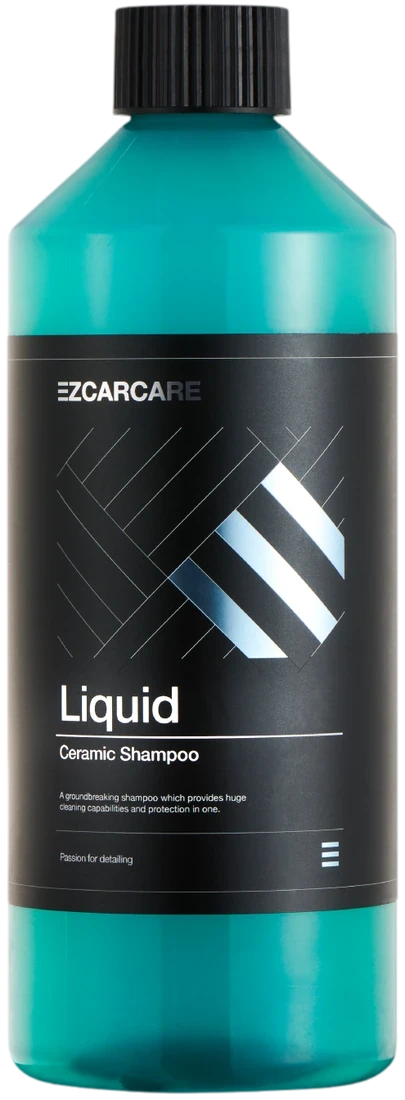
Liquid ceramic shampoo (about 10ml in 10 litres) tops up your protection every time you wash.
Rinse out buckets, mitts and brushes after every wash. Dirt left in them scratches paint and stops shampoo foaming.
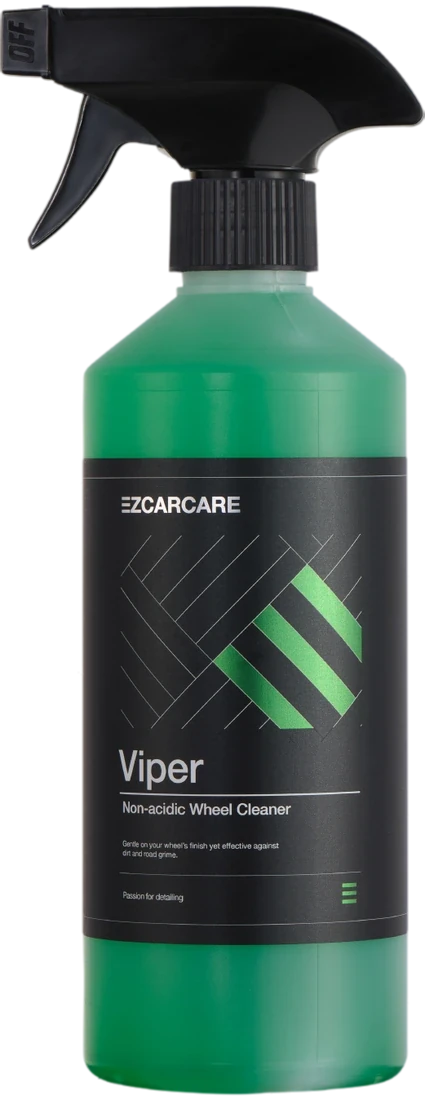
Wheels carry the worst of the dirt. Give them their own brushes, ideally their own bucket, so brake dust never ends up on your paint. Viper is non-acidic and safe on all wheel finishes.
How to
Mix Viper 10:1 to 3:1 for regular cleans, or use it 1:1 or neat for heavy brake dust.
Spray the whole wheel and leave it to dwell like a pre-wash. Often a pressure rinse is all it needs.
For stubborn dirt, agitate with a wheel barrel brush behind the spokes and a tyre brush on the sidewall.
Rinse thoroughly.
Once the tyres are clean and dry, work a small amount of Revolution into them with an applicator pad.
Good to know
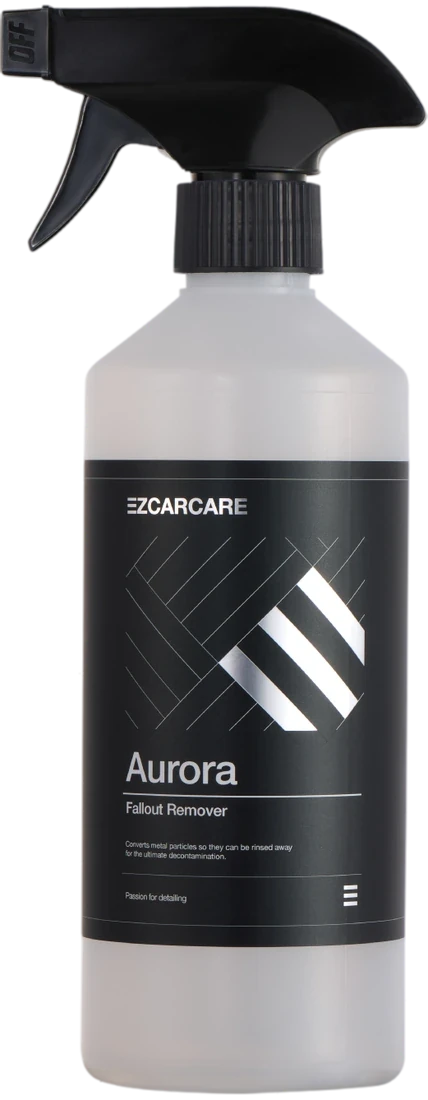
Caked-on brake dust? Clean the wheel first, then use Aurora. Putting it on a dirty wheel wastes it.
Any dirt left on the tyre stops the dressing bonding, so scrub them clean first.
Washing removes loose dirt. Decontamination removes what's bonded to the paint: iron fallout from brakes, railways and workshops, tar, and tree sap. It's time when the paint feels rough after washing, shows tiny orange dots or still looks dull. For most cars, that's about every 6 months.
How to
Wash and rinse the car first, so Aurora only works on what's actually bonded.
Spray Aurora in a fine, even film on cool paint and wheels.
Leave it a few minutes. It turns purple as it dissolves the iron. Don't let it dry.
Rinse thoroughly, top to bottom. Repeat on any stubborn areas.
Good to know
Got a clay bar? Use it after Aurora, with plenty of lubricant (shampoo mixed about 10:1 in a sprayer works). Glide in straight lines with almost no pressure, 50cm by 50cm at a time, and refold it as it discolours.
Tree sap can be acidic, so remove it promptly. Citrus Wash at 4:1 helps.
Decontaminating before you protect helps your sealant or wax bond and last longer.
Protection is the last step. It keeps the car cleaner for longer, makes water bead and sheet off, and adds gloss. Pick the method that suits your time.
Rinse-on: quickest
Mist Fusion onto the clean, wet car a panel at a time and rinse within 10 to 15 seconds. Or foam Insta Gloss on (100ml with 400ml of water in the lance), leave about 60 seconds and rinse. Never let either dry.
Spray and buff: longer lasting
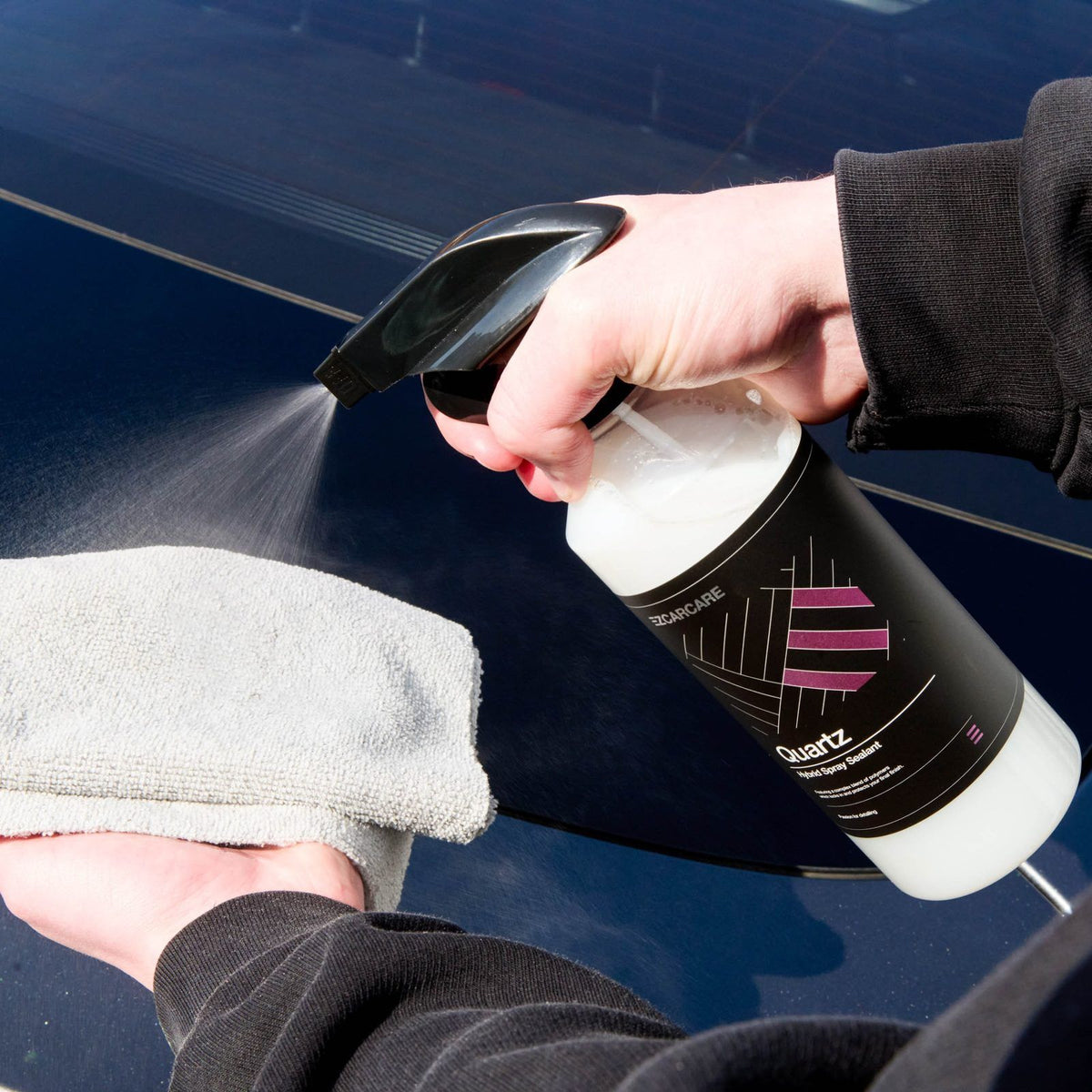
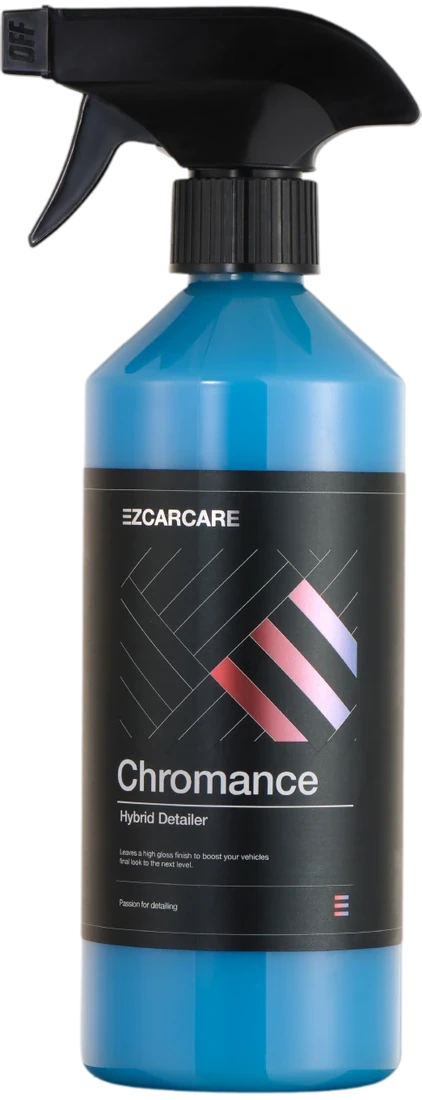
Quartz, Chromance, or Fusion on a dry car. Fold a cloth in half twice for eight clean sides. Two or three sprays cover half a bonnet. Spread with no pressure, then buff with a clean side or a second cloth.
Wax: the deepest finish
Apply SiO2 Ceramic Wax thinly with an applicator, in small circles or a crosshatch. Let it cure 5 to 15 minutes, then buff with a cloth folded in four, turning it every other panel. Up to 6 months of protection.
Good to know
Is the wax ready? Swipe a finger across it. If it smears, give it longer. If it wipes clean, it's ready to buff.
Less is more. Over-applying makes products smear and hard to buff. Not on hot panels or in direct sun.
Graphene Wax takes a little more effort: keep the layer very thin and add a second coat at least an hour after the first.
Only if there's thick, caked-on mud that will rinse away. Pre-wash is designed to lift road film, salt and grime on its own, so for most washes go straight in with Citrus Wash.
A product dried and left a mark. What do I do?
Move the car into the shade and let the panels cool. Start with the gentlest fix: rinse and wash it again, as it's usually just residue. If it's still there, a cleansing polish or glaze by hand will remove it. Only severe cases need machine polishing.
I've got water spots after using Fusion.
Wipe them with Clarity X and a clean cloth. The spots come off and the protection stays. Next time rinse within 10 to 15 seconds and keep out of direct sun.
My wash mitt is dragging.
Add a little more shampoo to the bucket or a dab straight onto the mitt. If it still drags on clean paint, it's bonded contamination, so decontaminate with Aurora.
How often should I decontaminate?
When the paint feels rough after washing or you can see tiny orange dots. For most cars that's about every 6 months.
How do I know when wax is ready to buff?
Swipe a finger across it. If it smears, give it a few more minutes. If it wipes clean, it's ready. It usually takes 5 to 15 minutes, faster when it's warm and humid.
Is it OK to wash in the sun?
Try to work in the shade. If you can't, rinse until the panels feel cool and work in smaller sections, so products never dry on.
Will Citrus Wash strip my wax?
Not at 10:1. Using it at strong dilutions every wash wears protection faster, so save the stronger mixes for really dirty cars. On coated cars, Arctic Meltdown is the gentlest choice.
How should I store my products?
Indoors, above 5°C. Freezing and thawing can change how some products, especially snow foams, perform.
Choosing a selection results in a full page refresh.
Opens in a new window.
EZ Support
Photo ready to send
Chats are stored to help with your order. Don't share payment details.
Privacy policy


 Citrus Wash
 Detailing Brush Set

 Arctic Meltdown
 Snow Foam Lance

 Champs
 Liquid
 EZ Buckets

 Viper
 Wheel Barrel Brush
 Tyre Brush
 Revolution

 Aurora

 H2Zero Drying Towel
 Fusion
 Quartz
 Chromance
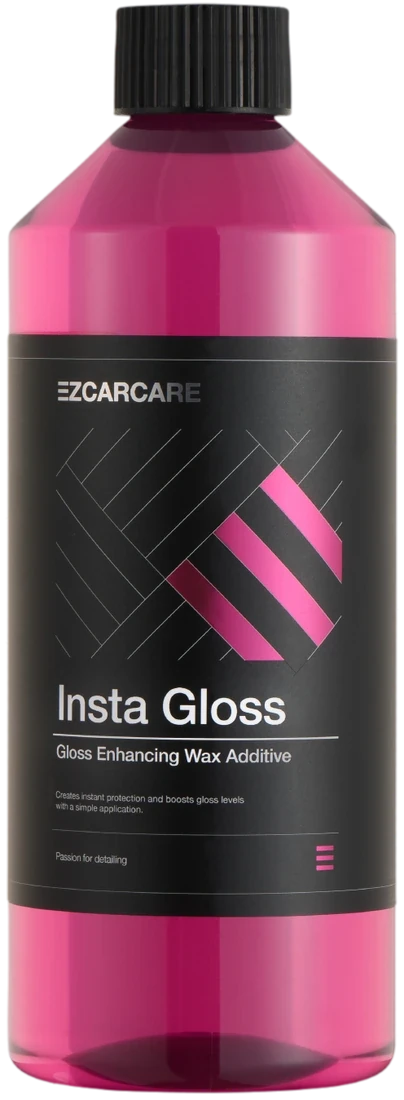 Insta Gloss
 Applicator Pad

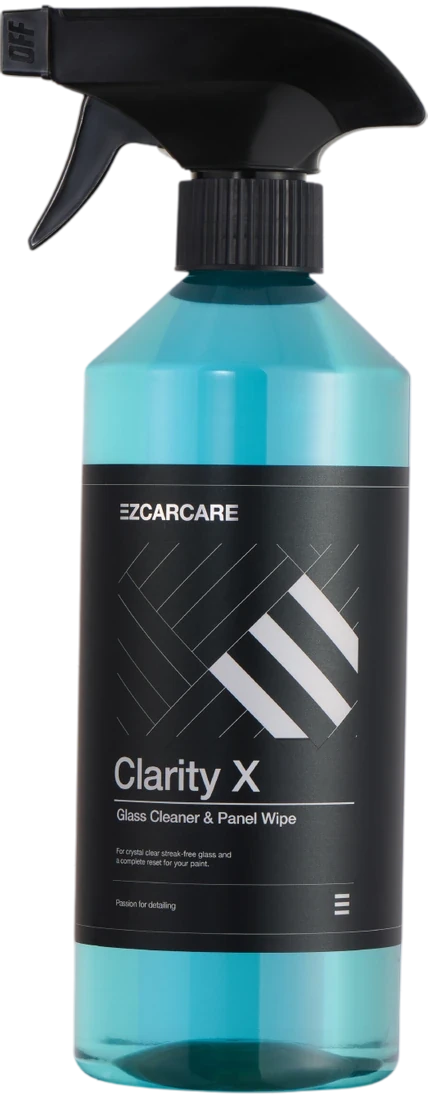 Clarity X
 Fishscale Glass Cloth
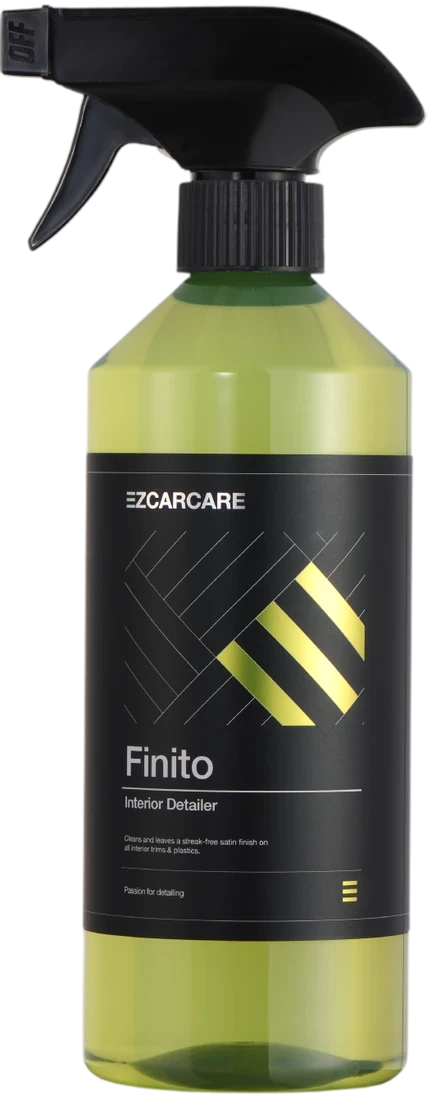 Finito
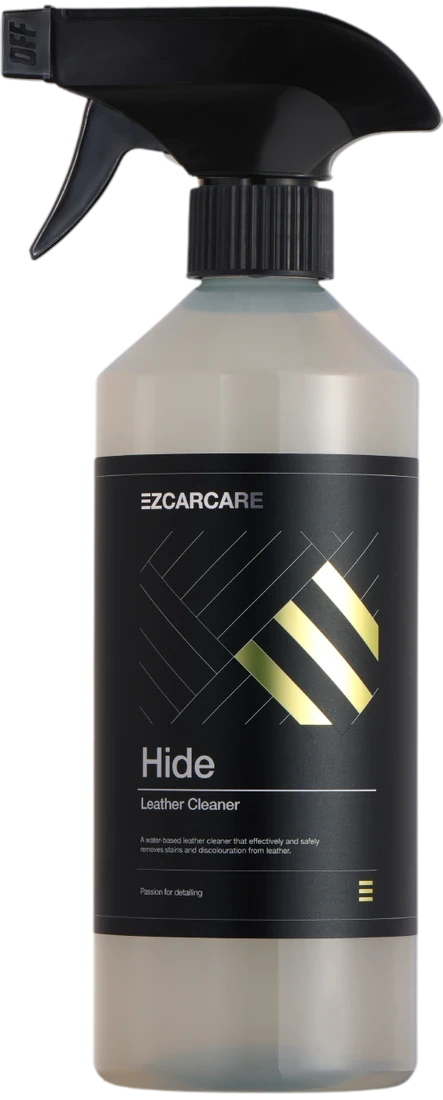 Hide
 Pet Hair Remover